Piston rods and drive shafts are among the most demanding components in CNC turning production. Operating under cyclic loading, constant friction, and exposure to hydraulic fluids or environmental contaminants, they must maintain dimensional stability and surface integrity over long service lives — especially in long-shaft and large-diameter applications where precision is hardest to achieve and most critical to performance.
For engineers specifying precision shaft components and procurement teams qualifying CNC machining suppliers, understanding how wear resistance is engineered into piston rods and drive shafts — and how to maintain them in service — is essential for reducing downtime and total maintenance costs.
This guide covers two critical manufacturing approaches to improving piston rod wear resistance — hard chrome plating process control and precision machining discipline — followed by a practical six-point maintenance framework and four operational precautions.
This article is part of Precimach’s technical series on CNC turning for shafts and rotational components. View our CNC turning capabilities →
2 Key Approaches to Improving Piston Rod Wear Resistance
Wear resistance in a piston rod is not a single material property — it is the combined result of base material selection, surface treatment methodology, and post-plating machining precision. Two areas deserve focused attention: the chrome plating process and the mechanical preparation before and after plating.
Approach 1: Controlled Hard Chrome Plating
Chrome plating is the industry-standard method for significantly increasing the surface hardness and corrosion resistance of steel piston rods. However, the quality of the chrome layer depends heavily on precise process control throughout deposition. Poorly applied chrome is worse than no chrome — microcracks, delamination, and hydrogen embrittlement can all result from inadequate process management.
A proven approach for piston rods is composite dual-layer chrome plating. An initial layer of crack-free, low-hardness chrome is deposited directly onto the base material, acting as a compliant interface. A second outer layer of hard chrome is deposited on top, providing the wear-resistant surface — combining the corrosion barrier of the inner layer with the abrasion resistance of the outer layer.
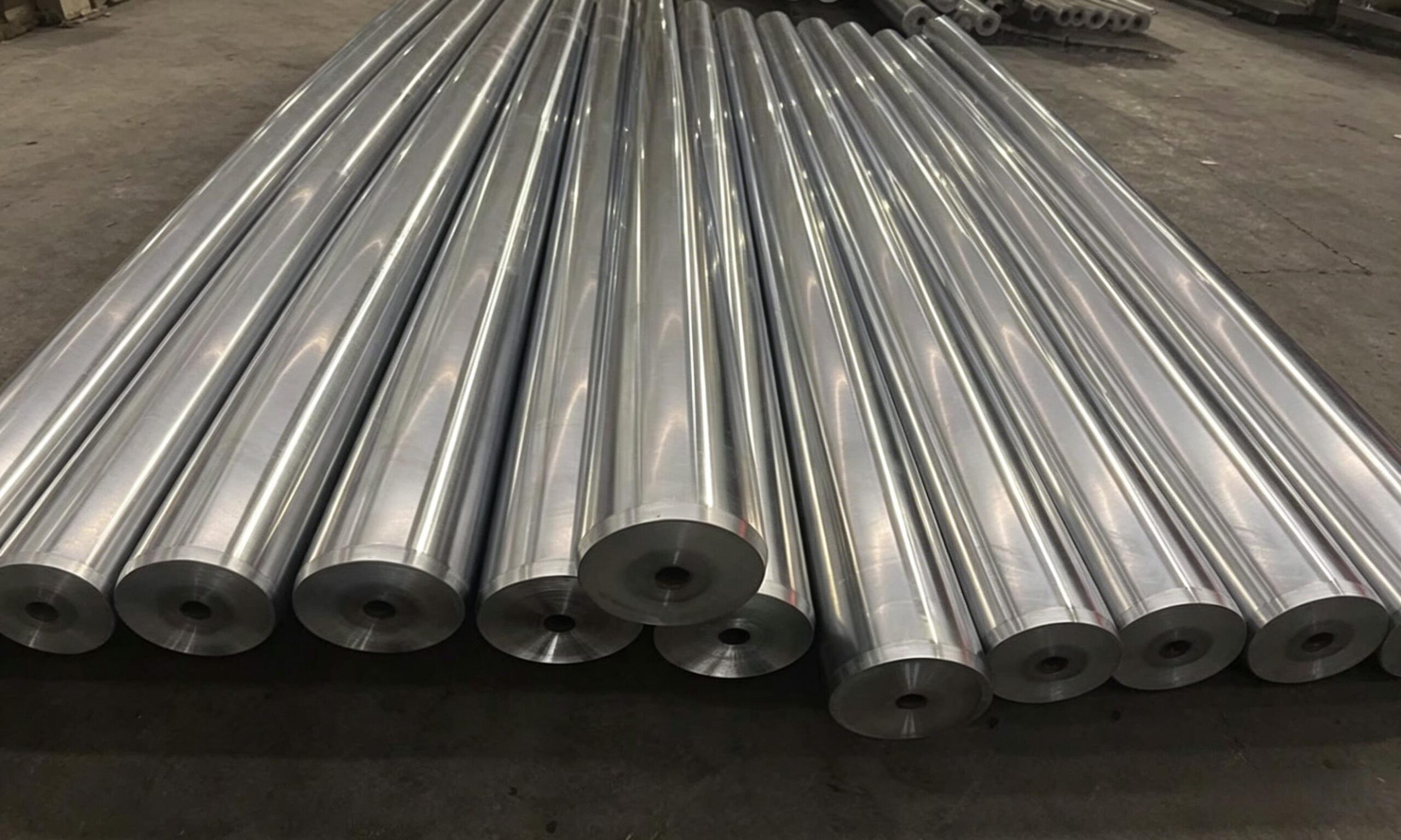
precision CNC turning and hard chrome preparation
Current density ramp-up and conforming anodes
When applying hard chrome, current density must be ramped up gradually from zero to the target value rather than applied at full intensity immediately. Sudden high current density creates excessive internal stress within the chrome layer, which reduces inter-layer bonding strength and can cause early delamination under service load.
Conforming anodes — electrodes shaped to match the profile of the workpiece — are strongly recommended for long shafts and complex geometries. They ensure uniform current distribution across the entire plating surface, directly translating to uniform coating thickness. For long shafts, where uneven plating can cause differential wear along the length, conforming anodes are particularly important.
Recommended plating parameters
The following parameters represent best practice for composite chrome plating on steel piston rod shafts:
| Parameter | Recommended Value |
|---|---|
| Base layer bath temperature | 65–70°C |
| Base layer current density | 25–30 A/dm² |
| Hard chrome bath temperature | 50–55°C |
| Hard chrome current density | 45–55 A/dm² |
| Anodic activation | Required each time workpiece enters bath |
| Purpose of anodic treatment | Removes passive oxide film, ensures strong bonding |
Anodic activation — briefly reversing the current polarity each time the workpiece is immersed — removes any passive oxide film on the steel surface and ensures strong metallurgical bonding between the substrate and the first chrome layer. This step is non-negotiable.
Approach 2: Pre- and Post-Plating Machining Discipline
The chrome plating process is only as good as the mechanical preparation that surrounds it. Both before and after plating, machining decisions directly affect the durability of the final surface.
Pre-plating surface requirements
Before any plating begins, the workpiece surface must meet strict quality requirements:
- Surface roughness must not exceed Ra 0.2 μm. Any rougher surface creates local stress concentrations under the chrome layer and compromises adhesion.
- All scratches and tool marks must be eliminated. Chrome plating does not fill or mask surface defects — it replicates them, often amplifying their effect on fatigue and wear.
- All sharp edges must be broken (chamfered or deburred). Sharp geometric features concentrate current density during plating, resulting in burnt, thickened chrome at edges and insufficient coverage elsewhere.
- Positioning holes and datum features must be clean and protected. Protective cones or radius-form inserts should be used wherever possible, and all fixtures must be thoroughly cleaned at each setup to prevent bath contamination.
- Residual tensile stress from prior machining should be minimized. High tensile residual stress on the surface reduces fatigue life and can promote hydrogen-assisted cracking after plating.
Post-plating precision grinding and superfinishing
After hard chrome plating, the shaft must be precision ground to final dimensions. The recommended grinding allowance is 0.03–0.05 mm per side (single side). This removes the outermost brittle chrome layer, reveals a denser and more uniform structure underneath, and brings the diameter to final tolerance.
Following grinding, superfinishing further reduces surface roughness to Ra 0.05–0.1 μm, which significantly extends chrome service life by reducing peak asperity contact stress during reciprocating motion. Superfinishing also effectively prevents early coating cracking — a common failure mode in plated shafts subjected to cyclic loading.
For long shafts, maintaining consistent grinding stock removal along the full length is a precision challenge. Steady rests (lunettes) are typically required to prevent workpiece deflection during grinding, and the same techniques used during turning to control L/D ratio challenges apply in the grinding stage.
Precimach capability: Our CNC turning and grinding capabilities for shaft components include steady rest support for long shafts, tight roundness control (≤0.005mm), and full surface inspection before and after any coating process. View our CNC turning services →
6-Point Piston Rod Maintenance Framework
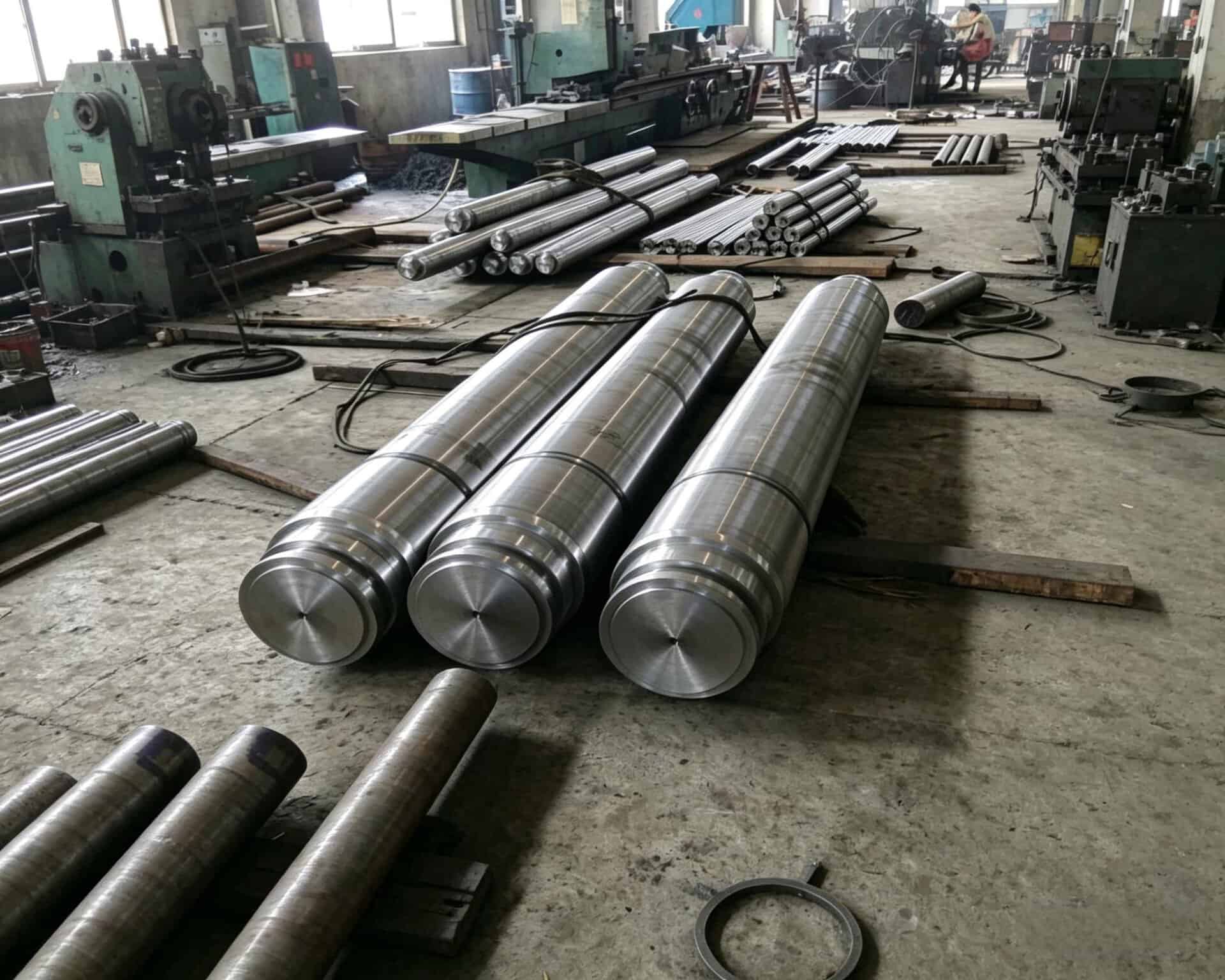
steady rest support for long-shaft precision machining
Even perfectly manufactured piston rods will fail prematurely if maintenance is neglected. The following six-point framework is based on established hydraulic and pneumatic cylinder maintenance practice and is particularly relevant for high-duty-cycle applications.
Regular inspection of connections and sealing interfaces
Inspect all threaded connections, clevis pins, rod eyes, and end fittings at regular intervals. Loose fittings introduce bending moments that accelerate fatigue crack initiation at the gland seal entry point. Any unusual noise, vibration, or leakage must be reported to maintenance personnel immediately.
Cleaning before extended storage
Clean and dry all filter elements before shutdown. Apply a thin protective oil film to exposed chrome rod surfaces and install protective end covers to prevent corrosion during storage.
Electrical isolation before disassembly
The electrical power supply must be fully disconnected and locked out before any mechanical work begins. Follow local lockout/tagout (LOTO) procedures at all times to prevent accidental pressurization.
Bearing and rod interface lubrication
Hardened chrome surfaces require continuous lubrication film maintenance. Dry running even for short periods causes chrome micro-spalling that damages both the rod and the seal lip. Confirm lubricant compatibility with all elastomeric seal materials.
Electrical system insulation checks
Schedule regular insulation resistance testing on solenoid valves and servo amplifiers. Degraded insulation causes abnormal force transients in the hydraulic circuit that load the piston rod beyond its design envelope.
Filter media inspection before pressurization
Visually inspect all filter cloths or media for folds, tears, or damage before each pressurization cycle. Compromised media allows particulate contamination that acts as an abrasive against the chrome rod surface.
4 Operational Precautions for Piston Rod Service Life
In addition to the maintenance framework above, four operational habits significantly extend piston rod service life in day-to-day use.
01 — Filter oil during refilling
Every hydraulic oil addition must pass through an appropriate particulate filter before entering the reservoir. New oil from drums frequently contains particles that exceed the cleanliness requirements of precision hydraulic systems.
02 — Unloaded warm-up after shutdown
For equipment shut down for one hour or longer, run the hydraulic pump at no-load for several minutes before operating actuators under load. This allows fluid viscosity to stabilize and seals to regain full elastomeric compliance.
03 — Monitor fittings, fasteners, and seals
A leaking connection that wets the piston rod surface during retraction draws contamination into the cylinder bore on extension, directly abrading the chrome surface from the inside. Address early-stage fitting leaks proactively.
04 — Replace emulsified hydraulic oil immediately
Hydraulic oil appearing milky or opaque must be drained and replaced without delay. Water contamination dramatically lowers lubricating film strength and causes accelerated corrosion on chrome surfaces and seal degradation.
Why Long-Shaft CNC Turning Demands Extra Attention to These Factors
The wear resistance and maintenance considerations above become significantly more challenging — and more consequential — in the context of long-shaft and large-diameter shaft turning:
- Deflection and vibration during turning increase surface roughness variability along the shaft length, making pre-plating Ra requirements harder to achieve consistently. Steady rests are mandatory for L/D ratios above 6:1.
- Chrome plating uniformity is harder to guarantee on long shafts without conforming anodes. Any variation in plating thickness translates directly to uneven post-plating grinding stock.
- Roundness (cylindricity) errors on long shafts cause differential contact stress on seals during reciprocating motion, accelerating seal wear even when the chrome surface itself is in good condition.
- Residual stress management after turning and grinding is more complex for long shafts, where thermal gradients during machining can introduce bowing or straightness errors that compromise both plating and dimensional stability.
For buyers sourcing piston rod shafts from CNC machining suppliers, these factors are important qualifying criteria. Suppliers with verified experience in long-shaft turning — demonstrated through specific equipment capabilities (steady rests, between-centers grinding, large chuck capacity), documented process parameters, and measurable quality metrics — offer substantially lower risk for demanding shaft applications.
Need precision CNC turned shaft components?
Precimach is an ISO 9001 certified CNC machining factory based in Suzhou, China, specialising in long-shaft and large-diameter turning, with steady rest support, multi-axis turning centers, and full CMM dimensional inspection. Tolerances to ±0.005mm. Fast quote within 12 hours.
Summary
Piston rod wear resistance is engineered through two complementary approaches: carefully controlled composite hard chrome plating (with precise bath temperature, current density ramping, anodic activation, and conforming anode geometry) and rigorous pre- and post-plating machining discipline (surface finish requirements, edge preparation, precision grinding, and superfinishing).
Once in service, a structured six-point maintenance framework combined with four operational precautions around oil filtration, warm-up cycles, wear-part monitoring, and emulsified oil replacement provides the foundation for maximizing piston rod service life.
For CNC machining operations specializing in long shafts and large-diameter turning, mastery of these surface and maintenance fundamentals is a key differentiator — and a critical signal of supplier capability for buyers sourcing precision shaft components globally.