A chrome plated piston rod looks like a single manufactured component. It is actually a system — a precisely ground steel substrate, an electrodeposited hard chrome layer with specific thickness and hardness characteristics, and a post-plating ground surface with a tightly controlled roughness profile. Each of these elements interacts directly with the dynamic seal that determines whether the hydraulic cylinder stays leak-free or becomes a warranty event.
This article covers what actually matters in chrome piston rod specification: the surface roughness parameters and why Ra alone is not enough, the coating thickness ranges for different duty cycles, hardness and its relationship to wear life, the seven inspection steps a qualified supplier should execute before shipping, and the surface defects that incoming quality teams need to know how to identify. The goal is to give OEM procurement and quality engineers the technical foundation to write better specifications and evaluate supplier responses with confidence.
This article is part of Precimach’s technical series on precision CNC turning for hydraulic cylinder components. View our CNC turning capabilities →
Part 1: Why Surface Finish Is the Primary Variable in Chrome Plated Piston Rod Performance
The sealing system of a hydraulic cylinder does not work by having the seal lip grip the rod tightly. It works by maintaining a thin hydrodynamic oil film — typically 0.1 to 1 μm thick — between the seal lip and the rod surface during reciprocating motion. That film is what actually prevents fluid bypass. The surface roughness of the chrome plated piston rod determines whether that film forms reliably, how thick it is, and how long it can be maintained.
This creates a counterintuitive design requirement: the rod surface must be smooth enough to minimise seal abrasion, but not so smooth that it cannot retain the oil film. A mirror-polished rod surface — Ra below 0.05 μm — offers no micro-valleys for oil retention. When the seal passes over it, the oil is swept away rather than retained, the film collapses at stroke reversal, and the seal runs briefly in boundary lubrication (direct asperity contact) at the most vulnerable point in the cycle. In high-cycle applications, this collapses seal life from years to months.
On the other side of the same problem: a surface that is too rough — Ra above 0.8 μm — has micro-peaks that act as cutting edges against the seal lip on every stroke. The seal material is progressively abraded. Hydraulic oil bypasses through the widening channel. The result is external leakage, which in field conditions is the most visible and most expensive hydraulic failure mode.
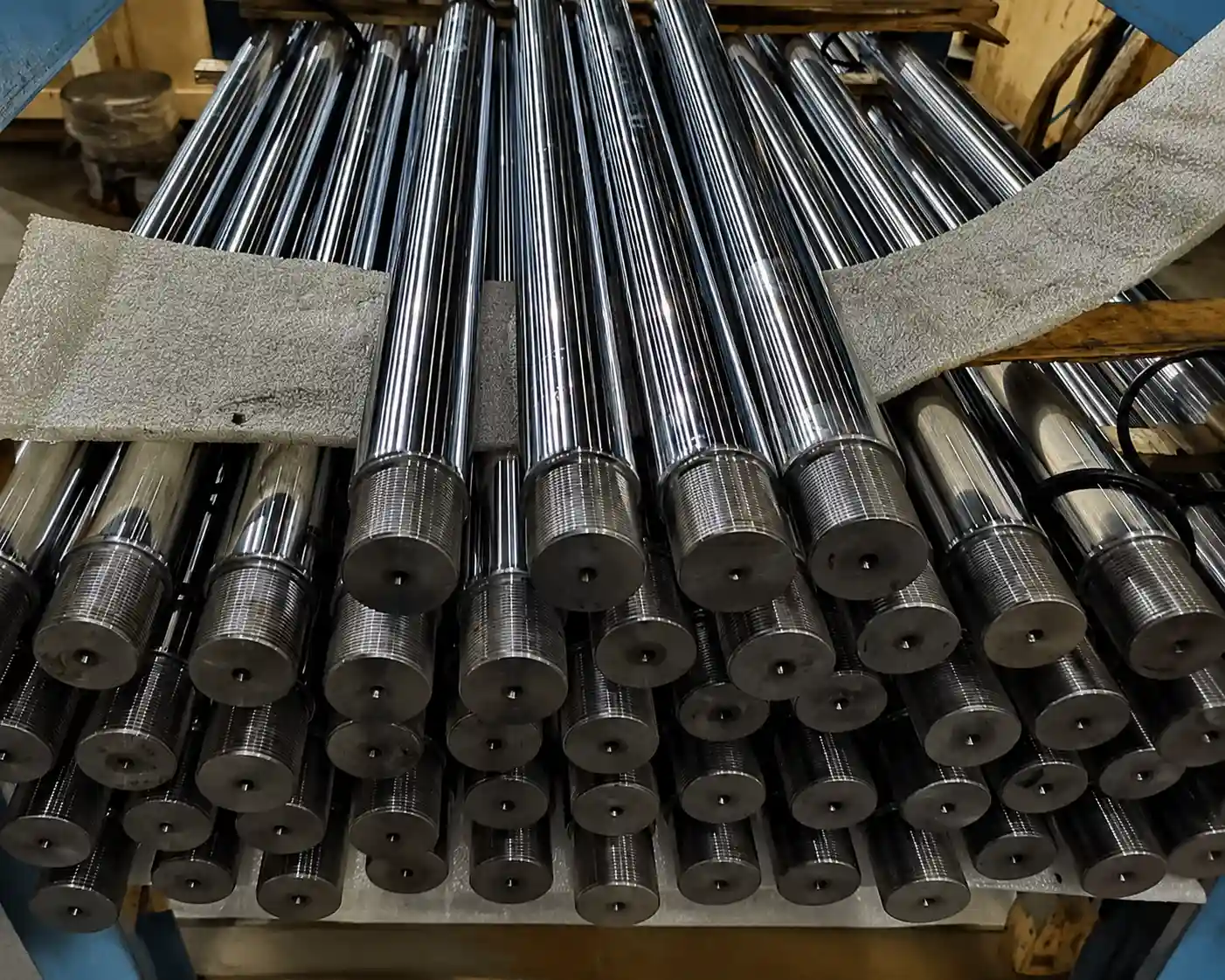
post-plating precision ground to Ra 0.2–0.4 μm sealing surface
The target surface profile: The ideal chrome plated piston rod surface has a “plateau honing” structure — broad, flat peak areas that minimise seal contact stress and abrasion, with fine valleys that act as oil reservoirs. This structure is what makes the difference between a seal that runs for 2 years and one that fails in 6 months on the same application. Ra alone cannot describe this structure — which is why Rz and Rmr matter.
Part 2: Ra, Rz, Rmr — Why One Parameter Is Never Enough
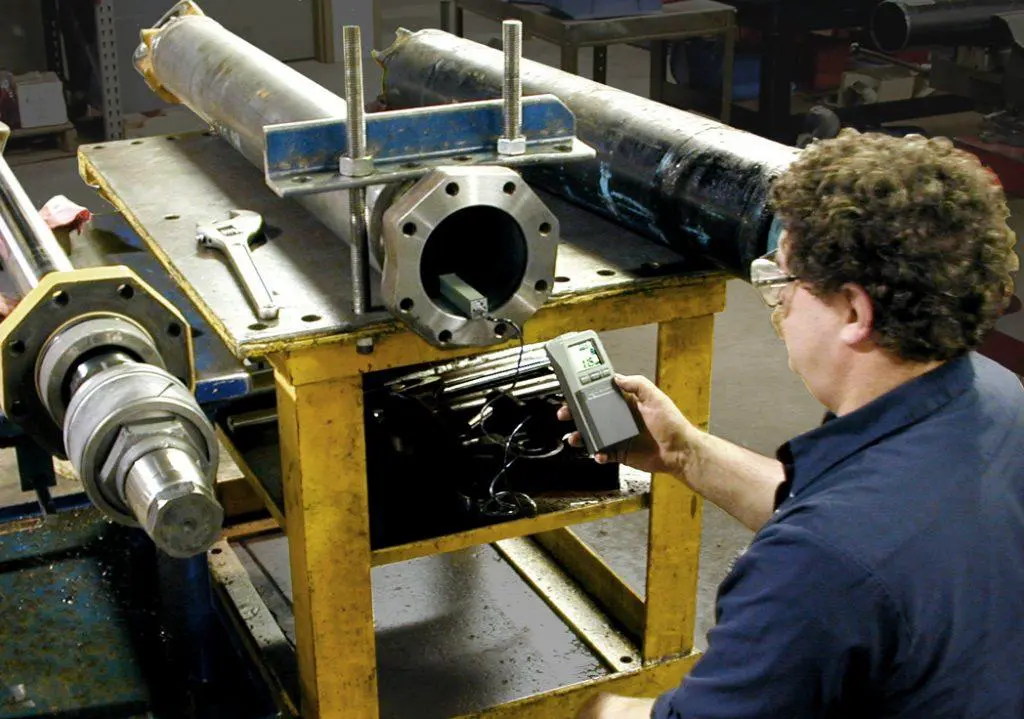
Ra, Rz, and Rmr all captured from a single stylus trace
Most engineering drawings specify only Ra — the arithmetic mean roughness. For a chrome plated piston rod, Ra is a necessary parameter but not a sufficient one. Consider: a mirror-smooth surface with a single machining scratch has a low Ra value because the scratch occupies a tiny fraction of the measured length. Yet that scratch represents a leakage pathway and a stress concentration that Ra cannot detect.
Ra — Arithmetic mean roughness
The standard general indicator. Provides the average deviation from the mean line across the measurement length. Universally understood, but inherently averages out extremes. Use as the primary specification parameter — but never in isolation for sealing surfaces.
Rz — Average maximum height
The average of the five highest peaks and five deepest valleys across the sampling lengths. More sensitive to sharp peaks that will cut the seal lip, and to deep valleys that become leakage channels. Two surfaces with identical Ra values can have very different Rz values if one has a few extreme peaks. Specify alongside Ra for any hydraulic piston rod.
Rmax (Rt) — Single maximum peak-to-valley height
The single largest peak-to-valley excursion across the entire measurement length. Catches isolated defects — a scratch, a chrome nodule, a pit — that Ra and Rz could both miss. Require Rmax reporting as a defect-detection parameter in incoming quality inspection, particularly for high-pressure applications.
Rmr — Material ratio (bearing area)
Defines the percentage of solid material at a given depth below the highest peak. A high Rmr at shallow depth means broad, flat peak areas — good bearing capacity, low seal contact stress. For premium chrome plated piston rod specifications, requiring Rmr(0.5μm) ≥ 50% combined with Rz ≤ 2.5 μm precisely defines the plateau texture that maximises both seal life and oil film retention.
Industry Ra target ranges by application type
The following ranges represent established industry consensus, consistent with ISO 6020/6022 and hydraulic seal manufacturer technical recommendations:
| Application Type | Ra Target (μm) | Rz Target (μm) | Notes |
|---|---|---|---|
| General industrial hydraulics (ISO 6020/6022) | 0.2 – 0.4 | 1.5 – 3.5 | Most OEM hydraulic cylinder applications. The reliable standard zone. |
| High-pressure systems (> 250 bar) | 0.1 – 0.2 | 0.8 – 1.6 | Higher pressure amplifies any surface non-conformance. Tighter Ra required. |
| Servo / low-friction precision | 0.05 – 0.1 | 0.5 – 0.8 | Position control systems where friction non-linearity must be minimised. |
| Agricultural / construction equipment | 0.4 – 0.8 | 3.0 – 6.0 | Acceptable for lower-cycle, rugged equipment with robust seal designs. |
| ❌ Too smooth (mirror polish) | < 0.05 | — | Insufficient oil film retention — boundary friction, early seal failure. |
| ❌ Too rough (uncontrolled) | > 0.8 | — | Abrasive seal wear — rapid leakage onset. Reject immediately. |
Procurement note: Some suppliers report Ra values measured on the pre-plating substrate or immediately after plating, before post-plate grinding. The Ra that matters — and the only Ra that should appear on a conformance certificate — is the value measured on the finished, post-grind surface of the chrome plated piston rod. Require this explicitly in your purchase order and inspection plan.
Part 3: Hard Chrome Coating — Thickness, Hardness, and the Plating-Grinding Sequence
Coating Thickness by Duty Cycle
Hard chrome (electrodeposited industrial chromium, not decorative chrome) is specified in thickness ranges that reflect the expected wear rate in service. The thicker the coating, the more material is available before wear exposes the base steel — and the higher the corrosion barrier in aggressive environments.
| Application | Chrome Thickness |
|---|---|
| Light-duty, indoor, low-pressure | 10 – 25 μm |
| Standard industrial hydraulics (most OEM) | 25 – 50 μm |
| Heavy-duty, outdoor, marine, high-cycle | 50 – 100 μm |
| Mining, dredging, extreme wear environments | 100 – 250 μm |
For high-cycle applications, specify toward the upper end of the applicable range. The additional chrome thickness does not increase friction or change the sealing interface — the surface geometry after post-plate grinding is identical. What it does is extend the wear margin before breakthrough to base metal, which is the event that triggers accelerated corrosion and dimensional loss simultaneously.
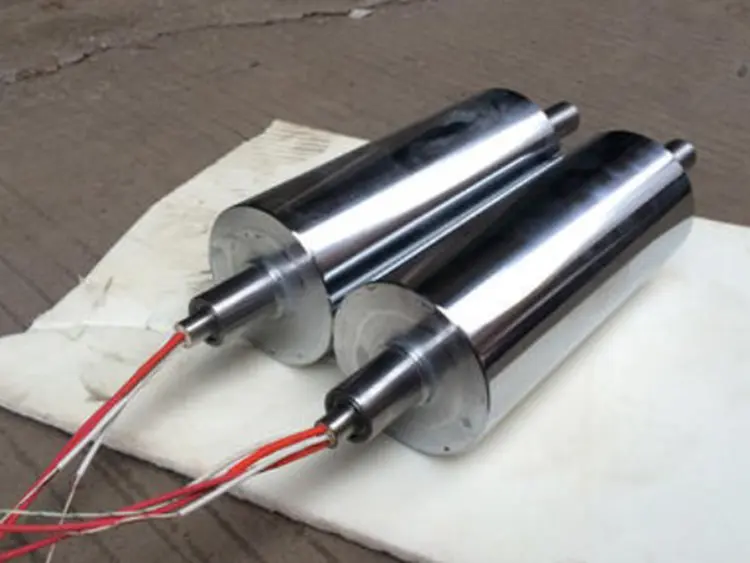
coating deposits at oversize diameter, then precision ground to final dimension
The Plating-Grinding Sequence — What Actually Produces the Final Surface
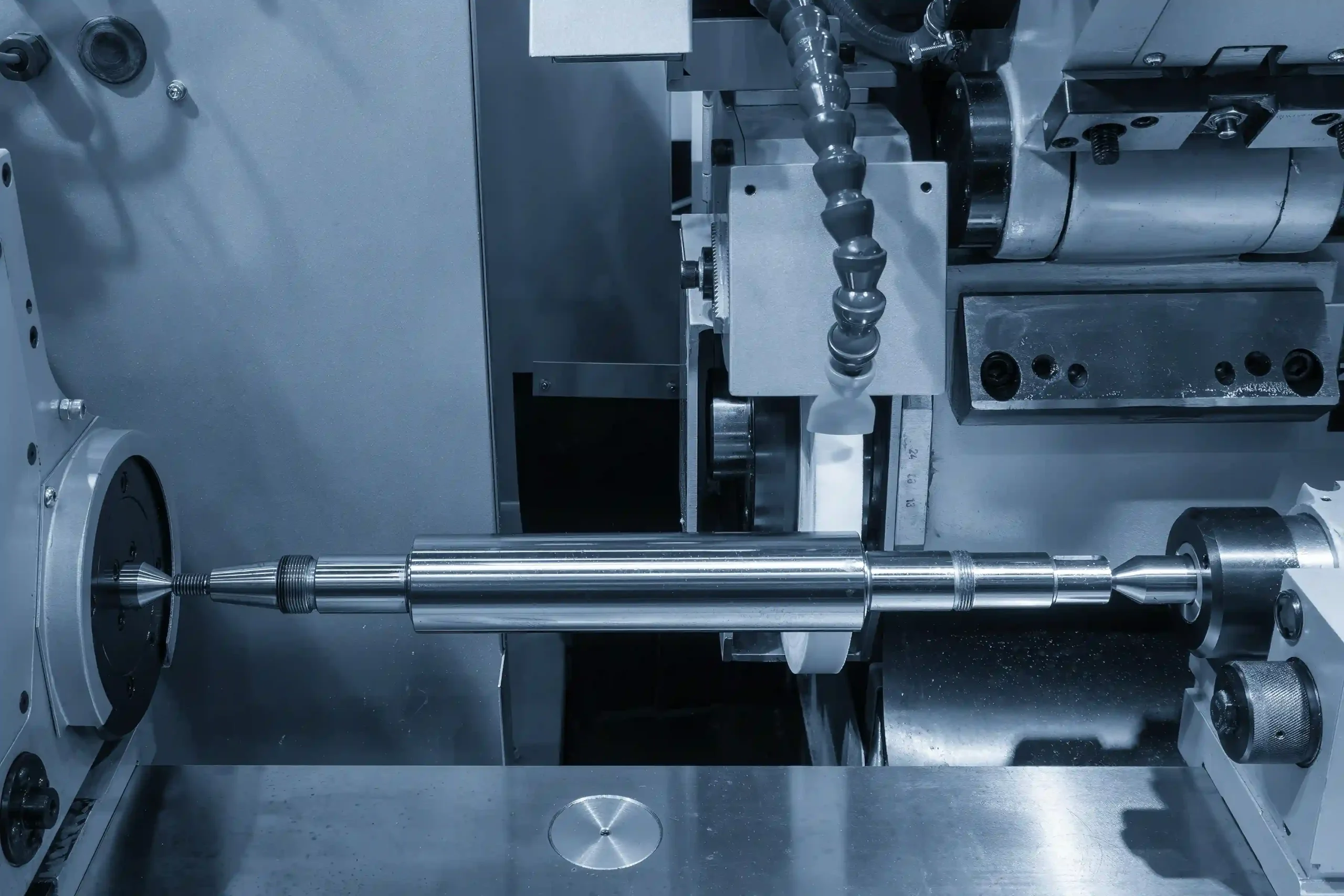
this is where the final Ra, diameter, and cylindricity are established
Hard chrome is always deposited to an oversize diameter — typically 0.03 to 0.08mm larger per side than the target finished diameter. This allowance compensates for the fact that the plated surface is too rough (as-plated chrome has an Ra typically 0.6–1.2 μm) and slightly uneven in thickness. Post-plate precision cylindrical grinding then removes this oversize layer, brings the rod to final diameter tolerance (typically h6 or f7), and establishes the final surface roughness.
A well-controlled grinding process uses two passes: a roughing pass to bring the diameter to near-nominal, then a finishing pass at low infeed rate to achieve the target Ra. The finishing pass parameters — wheel grit, infeed rate, workpiece speed, and coolant delivery — determine whether the final Ra falls at 0.2 μm or at 0.6 μm.
The supplier evaluation question to ask
Ask prospective suppliers: “What is your plating allowance per side, and what is the chrome thickness measured after grinding?” If they cannot answer this precisely — or if they say they don’t measure chrome thickness after grinding — they cannot guarantee minimum chrome coverage on the finished rod. This is a fundamental process control gap that disqualifies a supplier for precision hydraulic applications.
Coating Hardness — Why HV 850–1,050 Matters
Hard chrome achieves 850–1,050 HV (approximately HRC 68–72) — significantly harder than the base steel substrate (typically HRC 28–34 after Q&T for 4140) and harder than any contamination particles likely to be encountered in service. This hardness differential is what makes the chrome layer protective rather than contributory to wear.
850–1,050 HV
Hard chrome (electrodeposited)
850–950 HV
Electroless nickel (heat treated)
1,100–1,400 HV
HVOF tungsten carbide
550–650 HV
Induction-hardened steel (no coating)
One characteristic of hard chrome that sometimes causes concern is the presence of micro-cracks visible at magnification. These are normal in electrodeposited hard chrome — they form as the coating relieves internal stress during deposition. In moderate corrosion environments, they do not impair performance and may even assist lubrication by acting as micro-reservoirs. In aggressive chloride or acid environments, however, through-cracks become corrosion pathways to the steel substrate. In these applications, consider duplex nickel-chrome plating, ceramic coatings, or HVOF alternatives.
Part 4: The 7-Step Inspection Protocol — What a Qualified Supplier Does Before Shipping
For a qualified supplier of chrome plated piston rods, quality inspection is not a pass/fail stamp at the end of production. It is a documented sequence of measurements taken at specific process stages, with actual measured values recorded against each acceptance criterion. The following seven-step sequence is what a competent supplier executes — and what you should require as documented evidence before accepting delivery.
Pre-plate substrate dimensional verification
Before the rod enters the plating line, measure and record OD (at minimum 5 axial positions, 2 angular positions per section), straightness, and cylindricity. Verify that the substrate geometry is within the plating allowance tolerance — typically ±10% of the nominal plating stock. A rod that is already at the lower dimensional limit will be undersize after plating and grinding.
Post-plate chrome thickness measurement (before grinding)
Measure chrome layer thickness using eddy-current or magnetic induction gauge per ISO 2360 or ASTM B499. Minimum 3 measurement positions along the rod length. Target: plating allowance ±10%. This step is the one that low-quality suppliers most commonly skip — and without it, there is no way to verify minimum chrome coverage on the finished rod after grinding removes the outer layer.
Post-grind OD dimensional inspection
Measure finished OD at all positions using calibrated digital micrometer or CMM. Record actual values against drawing tolerance. For h6 tolerance class: a 50mm rod should be 50.000 to 49.984mm. Roundness and cylindricity measured using roundness instrument (not micrometer alone) — specify ≤ 0.02mm cylindricity for precision hydraulic applications.
Surface roughness measurement — Ra, Rz, Rmr
Contact profilometer measurement per ISO 4287, using a traceable calibrated instrument. Minimum 3 positions along rod length, 2 circumferential directions per position. Record Ra, Rz, and Rmax as a minimum. For critical applications, additionally report Rmr(0.5μm) — the bearing area parameter that confirms plateau surface structure. Acceptance: Ra 0.2–0.4 μm, Rz ≤ 3.5 μm for standard industrial hydraulics.
Visual inspection and dye penetrant testing
100% visual inspection of every rod under directional lighting: inspect for pinholes, nodules (chrome burn), bare areas, edge build-up, and colour variations indicating heat damage. For critical applications, fluorescent dye penetrant testing to detect micro-cracks that penetrate through the full chrome layer to the substrate. Reject criteria: any pinhole > 0.5mm diameter, any bare area, any nodule above surface profile threshold.
Straightness / runout measurement
Measure total indicator runout (TIR) over full length on V-blocks or CMM. Acceptance criterion: typically ≤ 0.1–0.3mm per metre depending on cylinder bore clearance and seal type. For precision servo cylinders, straightness tolerance should be stated on the drawing — do not accept “standard tolerance” without a defined value.
Batch conformance certificate with actual measured values
Signed QC certificate listing actual measured values for all parameters — not “pass” or “conform” without supporting data. Certificate must reference batch/heat number traceable to material certificate and plating bath record. This document is your audit trail if a warranty claim or field failure investigation arises later. A supplier who provides only a “100% inspected” stamp without actual data is not providing evidence of conformance.
Part 5: Surface Defects — Identification Guide for Incoming Quality Teams
Even with good process control, chrome plating defects occur. The following defects appear on chrome plated piston rods in practice — knowing what each looks like, what causes it, and how to detect it allows incoming inspection to intercept non-conforming parts before they reach assembly.
| Defect | Appearance | Cause | Detection |
|---|---|---|---|
| Pinholes | Small pits or voids in chrome surface | Hydrogen evolution during plating; bath contamination | Visual inspection; high Rvk on profilometer |
| Chrome nodules / burn | Raised rough patches, often at rod ends | Excessive current density; poor fixture design | Visual; Ra spike on profilometer at affected zone |
| Through-cracks | Fine crack network visible at 10× magnification | Normal micro-cracking is acceptable; through-cracks indicate excessive stress | Dye penetrant test; 10× loupe |
| Bare / missed areas | Dark grey unplated patches | Poor pre-cleaning; inadequate masking removal | Visual; thickness gauge reads zero |
| Grinding burn | Blue/brown discolouration bands | Excessive grinding heat; glazed wheel | Visual; Barkhausen noise method for critical apps |
| Undersize OD | Diameter below drawing minimum | Insufficient plating allowance; over-grinding | Micrometer or CMM measurement |
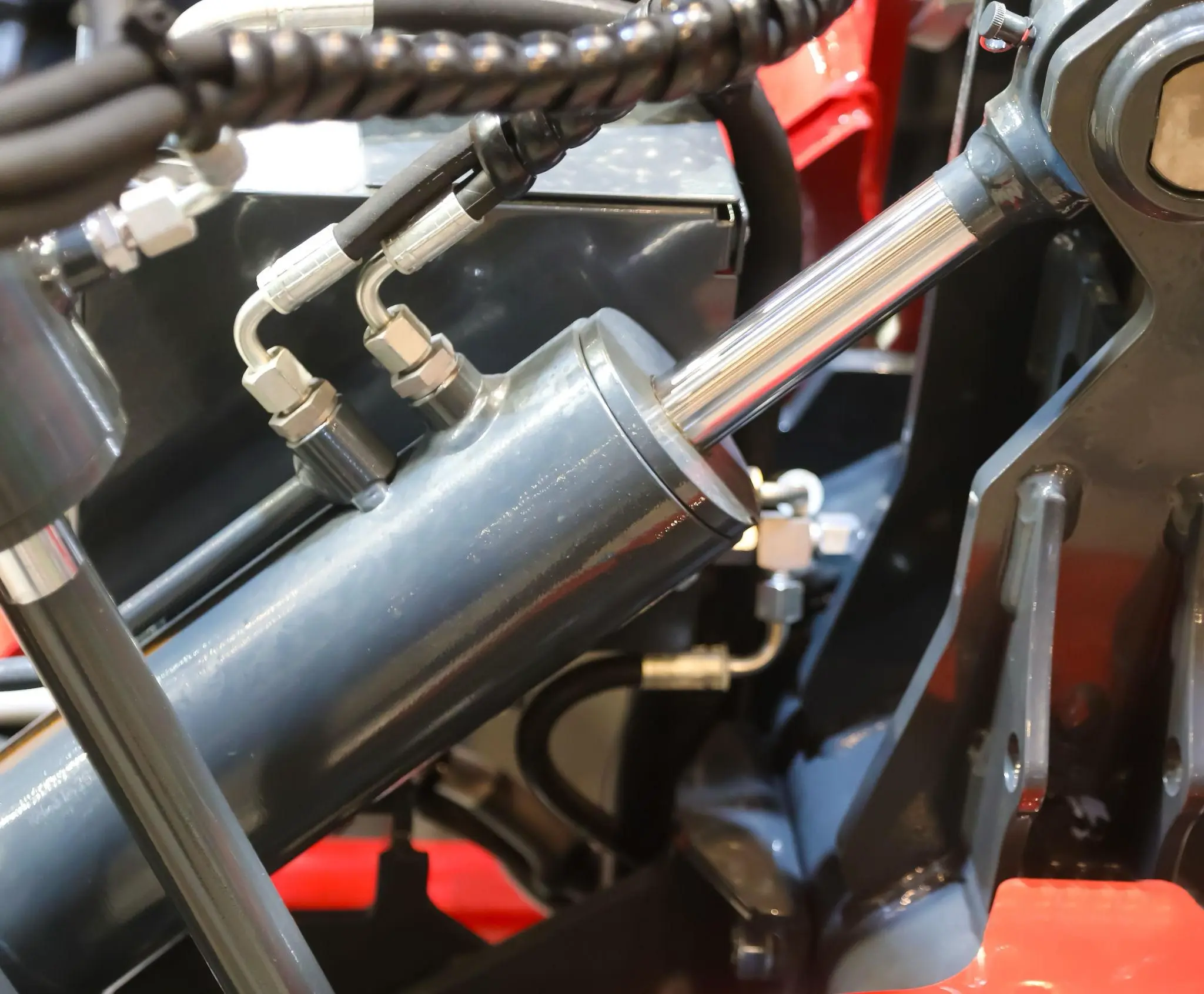
chrome rod surface quality determines service interval and leakage risk
Part 6: When to Consider Chrome Alternatives
For the vast majority of industrial and mobile hydraulic applications, hard chrome remains the correct choice — it provides the right balance of wear resistance, corrosion protection, surface finish capability, and cost. But three situations make alternatives worth evaluating:
Regulatory environment (EU/ELV/RoHS-adjacent)
Hexavalent chrome (Cr⁶⁺) is restricted under EU REACH for some applications. Trivalent chrome plating (700–900 HV, ~10–20% cost premium) is the nearest functional equivalent and is fully compliant. Suitable for most hydraulic cylinder applications as a direct substitute.
Aggressive chemical or highly corrosive environments
Electroless nickel (500–950 HV depending on heat treatment, 15–30% cost premium) provides superior resistance to acid and alkali attack, uniform coating on complex geometry, and no hydrogen embrittlement risk. Preferred for chemical processing and pharmaceutical hydraulic applications.
Extreme abrasion (mining, dredging, sand contamination)
HVOF tungsten carbide (WC-Co or WC-CoCr, 1,100–1,400 HV, 80–150% cost premium) outperforms chrome under severe abrasive conditions. The substantially higher cost is justified only when wear data shows chrome lifetime is unacceptably short — typically less than 6 months in service.
For the international reference framework governing hard chrome plating quality — covering coating thickness, hardness verification, adhesion testing, micro-crack characterisation, and quality classification — the ISO 6158 standard (Metallic coatings — Electrodeposited coatings of chromium for engineering purposes) is the benchmark specification referenced by hydraulic cylinder OEMs and chrome plating suppliers globally when defining and verifying hard chrome piston rod coating quality.
Industry reference: ISO 6158 — Metallic coatings: Electrodeposited coatings of chromium for engineering purposes defines thickness classification, hardness, adhesion, porosity, and quality acceptance criteria for industrial hard chrome — the standard used by hydraulic cylinder manufacturers and MRO suppliers to specify and verify chrome plated piston rod coating quality worldwide.
Summary
The performance of a chrome plated piston rod is determined by four parameters working together: surface roughness in the Ra 0.2–0.4 μm window that supports stable oil film formation, chrome coating thickness matched to the duty cycle, hardness ≥ 850 HV that withstands abrasive wear from contaminated fluid, and dimensional conformance — OD, straightness, roundness — that keeps the seal contact geometry uniform through the stroke.
None of these can be confirmed by a “100% inspected” stamp on a packing slip. They require actual measured data from seven distinct inspection stages. A supplier who provides this data routinely is not offering extra paperwork — they are offering the traceability that protects your warranty reserve, your field service budget, and ultimately your customer relationships.
Need chrome plated piston rods with full inspection documentation?
Precimach is an ISO 9001 certified CNC machining factory in Suzhou, China — supplying chrome plated piston rods with Ra 0.1–0.4 μm surface finish, 25–100+ μm hard chrome to specification, and full batch documentation including dimensional report, Ra/Rz/Rmr surface texture report, chrome thickness record, hardness certificate, and pressure test data.
- Surface finish: Ra 0.1–0.4 μm with Rz and Rmr verification — not Ra alone
- Chrome thickness: 25–100+ μm measured post-grind per ISO 2360
- Base materials: 4140, 42CrMo, 38CrMoAlA, 17-4PH, 316L stainless
- Diameter range: 20mm–500mm · Length up to 16,000mm
- Full 7-step inspection protocol, actual measured values per batch
- Alternative coatings: electroless nickel, HVOF tungsten carbide available on request