Flange shaft machining and precision piston rod production are two of the most technically demanding disciplines in CNC turning — and two of the most consequential for the long-term reliability of the hydraulic machinery and industrial drive systems they serve. While the flange shaft transmits rotational torque across assembly interfaces, and the piston rod converts hydraulic pressure into linear force, both components demand the same uncompromising approach: tight dimensional tolerances, controlled surface finish, and verified coaxiality at every stage of production.
This article explains the key requirements of flange shaft machining, the working principles of precision piston rods, and examines the common causes of unintended automatic rod extension — including a detailed diagnostic case study and procurement guidance.
This article is part of Precimach’s technical series on precision CNC turning for shafts and rotational components. View our CNC turning capabilities →
Part 1: Flange Shaft Machining — Key Requirements and Process Overview
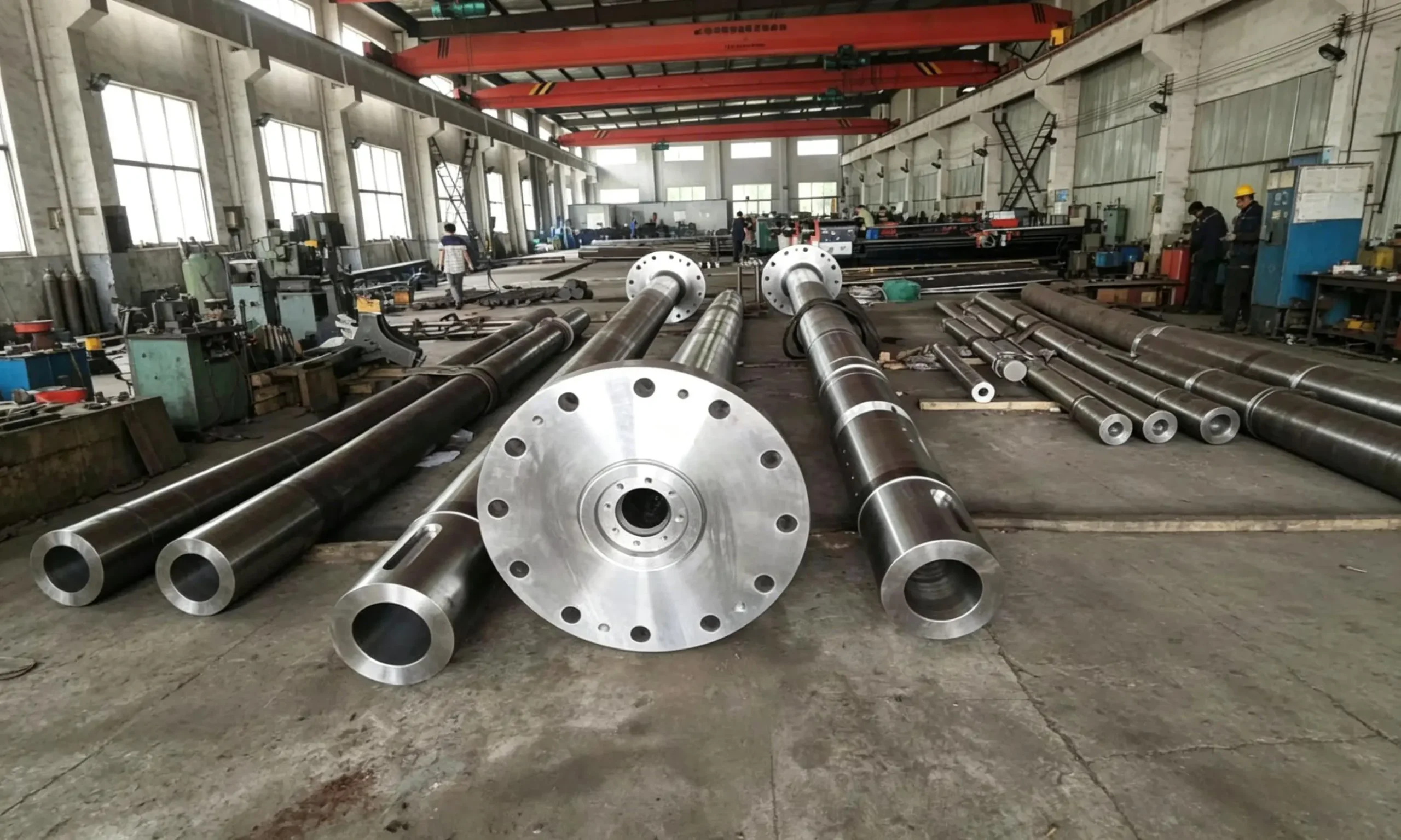
heavy-duty machining with tight coaxiality control
What Is a Flange Shaft?
A flange shaft is a rotating transmission component that integrates one or more flange faces directly into the shaft body. The flanges provide a rigid, precisely located mounting interface for mating components such as couplings, gearboxes, pump housings, and drive discs — allowing torque to be transmitted across assembly interfaces with minimal misalignment and vibration.
Flange shafts are widely used in heavy industrial drives, marine propulsion systems, wind turbine gearboxes, hydraulic pump assemblies, and large-format industrial machinery. The core challenge in flange shaft machining is the combination of large diameter flange faces with long shaft journals — requiring simultaneous control of flatness, perpendicularity, cylindricity, and coaxiality in a single workpiece.
Critical Dimensional Requirements for Flange Shaft Machining
- Flange face flatness: Typically ≤ 0.02mm over the full flange face diameter. Poor flatness causes uneven bolt pre-load distribution, which generates fretting fatigue at the mating interface under cyclic torque loading.
- Perpendicularity of flange face to shaft axis: Must be held within 0.02–0.05mm/100mm. Angular error here creates a wobble moment at the coupling interface that increases bearing load and shortens bearing life.
- Shaft journal cylindricity: Typically within half the diameter tolerance. Out-of-round journals cause dynamic unbalance and differential bearing race wear.
- Coaxiality of all journals and flange bore: All rotating surfaces must be coaxial to within 0.01–0.03mm to prevent eccentricity-induced vibration at operating speed.
- Bolt hole position and pitch circle diameter (PCD): Hole positions must be within ±0.05mm of the specified PCD and angular spacing to ensure interchangeability and even load distribution across fasteners.
CNC Turning Process Sequence for Large Flange Shafts
Precision flange shaft machining presents significant fixturing and sequence planning challenges due to the diameter discontinuity between the flange and the shaft journals. The following process sequence minimises dimensional error accumulation:
- Rough turning of all diameters — generous stock removal (1.5–3mm per side) to release internal stresses from the forged or rolled blank before any precision work begins.
- Thermal stabilisation — for large blanks, allowing the workpiece to reach ambient temperature after rough turning prevents thermal expansion error from carrying into semi-finish dimensions.
- Semi-finish turning — all journals and flange faces brought to within 0.15–0.3mm of final dimension. Datum center holes at both ends established or verified at this stage.
- Flange face finish turning and boring — flange bore and face finished in a single chuck setup to guarantee perpendicularity. This is the most critical setup in flange shaft production.
- Shaft journal finish turning and grinding — between-center grinding with steady rest support brings all journals to final tolerance and surface finish specification.
- PCD drilling and final inspection — bolt holes machined on CNC machining centre; full CMM inspection of all GD&T callouts including flatness, perpendicularity, cylindricity, and coaxiality.
Precimach capability: We produce large flange shafts from 50mm to 500mm flange diameter and shaft lengths up to 3,000mm, with steady rest support, between-center grinding, and full CMM reporting including flatness and perpendicularity verification. View CNC turning services →
Part 2: How Precision Piston Rods Work — Principles and Surface Engineering
A precision piston rod is the linear force transmission element of a hydraulic or pneumatic cylinder. It converts the pressure energy of the working fluid — applied against the piston face — into controlled mechanical displacement and force. The rod itself is subjected to compressive load on extension, tensile load on retraction, and continuous sliding contact with the gland seal and guide bushing on every stroke.
Surface Contact and Elastic-Plastic Deformation at the Seal Interface
The contact surface between the piston rod and its sealing elements is the most mechanically demanding interface in the entire cylinder assembly. The seal lip must maintain a consistent contact stress against the rod surface across the full stroke length — neither too high (which causes seal fatigue and rapid wear) nor too low (which allows fluid bypass and leakage).
Achieving this requires the rod surface to possess a carefully controlled combination of elastic and plastic deformation characteristics. A hard chrome-plated surface (850–1,000 HV) provides the elastic stiffness to resist permanent deformation under repeated seal contact load; the micro-roughness profile (Ra 0.1–0.4 μm) provides the plastic micro-conformance that supports a stable hydrodynamic oil film between rod and seal during reciprocating motion.
This oil film is the key to low-friction, low-wear piston rod operation. When the film is maintained, friction is governed by fluid viscosity rather than direct asperity contact — and energy consumption, heat generation, and seal wear are all minimised. When the film breaks down, the system transitions to boundary lubrication — with dramatically higher wear rates on both rod and seal.
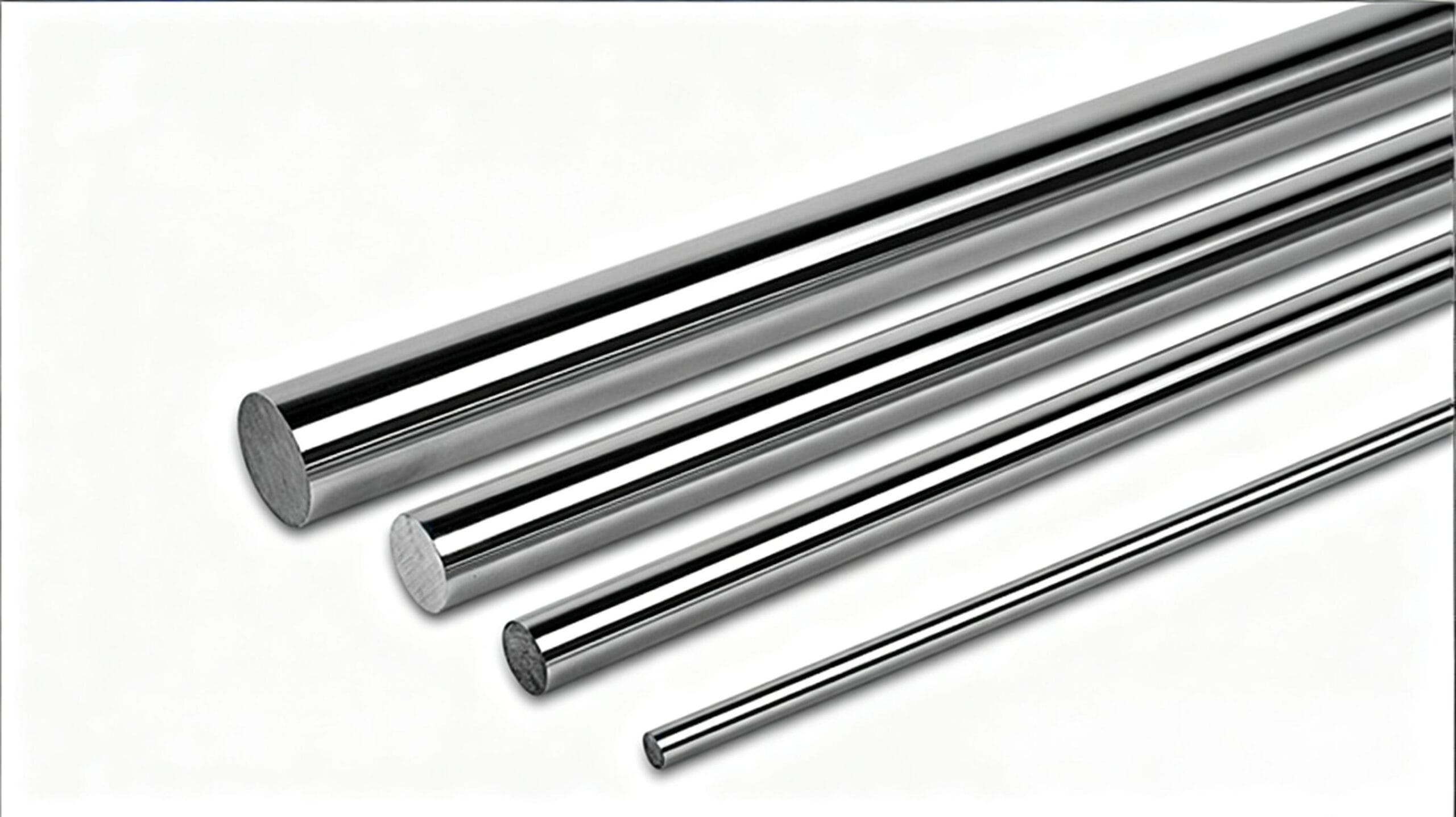
controlled surface finish for stable hydrodynamic oil film
Why Surface Roughness from Grinding Matters
The surface roughness of a precision piston rod is not a cosmetic specification — it is a functional parameter that directly controls the friction regime, oil film retention, and seal service life. The Ra values achieved through precision cylindrical grinding and superfinishing create a specific texture that:
Minimises friction losses
Low Ra (0.1–0.3 μm) reduces asperity contact area, keeping friction in the hydrodynamic regime and reducing energy consumption per stroke cycle.
Retains lubricant film
Controlled micro-valleys in the ground surface act as oil reservoirs that maintain film continuity during the reversal point of each stroke — the moment of highest film collapse risk.
Maximises seal contact stability
A consistent Ra prevents localised high-pressure contact zones on the seal lip that cause heat concentration, rubber fatigue, and early dimensional change in the seal cross-section.
Reduces contamination ingress
A well-finished rod surface reduces the mechanical transport of abrasive particles past the wiper seal on rod retraction, protecting the primary seal and cylinder bore from abrasive wear.
Part 3: Why Does a Precision Piston Rod Extend Automatically? Causes and Diagnosis
Unintended automatic extension of a hydraulic cylinder piston rod — without operator command — is a significant operational fault that can indicate multiple failure modes ranging from control valve spool sticking to severe internal seal failure. Correct diagnosis requires a systematic elimination approach beginning at the control circuit and progressing to the hydraulic cylinder itself.
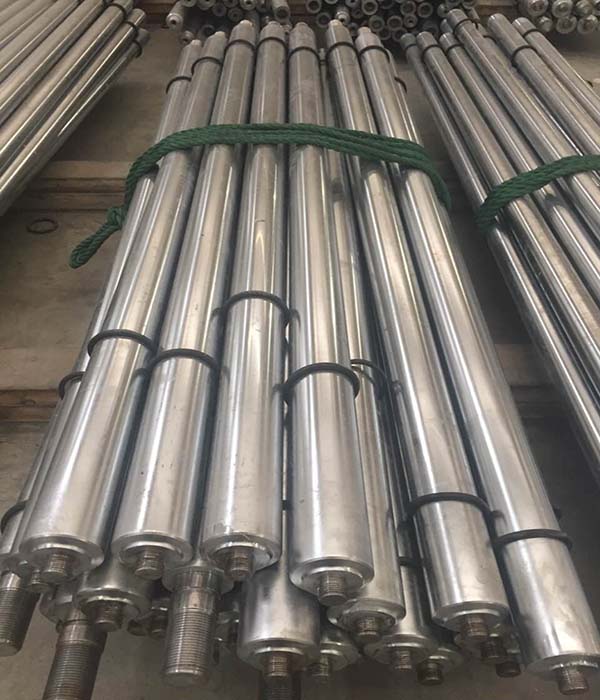
internal seal condition determines extension behaviour
Root Causes of Automatic Rod Extension
Automatic extension of a piston rod without operator input is typically caused by one or more of the following conditions:
- Control valve spool sticking: A partially seized spool can hold the metering edge open to the rod-extend circuit without full pilot command — allowing a continuous low-flow oil path to the cylinder’s rod-side port.
- Failed or bypassing relief valve: If the relief valve fails open or at too low a cracking pressure, the circuit cannot build and maintain the pressure differential needed to hold the rod in position.
- Severe internal seal failure (piston seal bypass): When the piston seal fails, pressurised oil bypasses directly across the piston face — creating a net extending force even at rest.
- External load-induced drift: With a degraded counterbalance valve, gravity load can overcome the hydraulic holding force, causing slow extension under self-weight.
Diagnostic Case Study: Excavator Arm Cylinder Automatic Extension
The following diagnostic sequence illustrates a structured approach to identifying the root cause of automatic rod extension — taken from a documented excavator arm (stick) cylinder fault investigation:
Pilot circuit pressure test
Secondary pilot pressure output from the pilot control circuit was measured and confirmed within specification. This eliminated pilot control valve failure as the root cause — the fault was downstream of the pilot system.
Main control valve relief valve check
If the arm cylinder main control valve port relief valve were damaged, the working circuit would be unable to build pressure and the cylinder would be incapable of any motion — including automatic extension. Since the arm was extending (not stationary), relief valve failure was ruled out.
Valve spool sticking assessment
Control valve spool stiction was identified as a possible contributing factor. However, the severity and consistency of the automatic extension behaviour suggested a more fundamental internal fault rather than an intermittent spool issue.
Internal leakage test — confirmed root cause
Test method: The main control valve was restored to normal. The arm cylinder was extended to end-of-stroke position. The rod-side hydraulic hose was disconnected. The engine was started and the pilot control valve handle operated to continue supplying oil to the piston-side — while observing whether hydraulic oil leaked from the disconnected rod-side port.
Result: A large volume of hydraulic oil flowed at high velocity from the rod-side port, confirming that the piston seal had failed severely — allowing direct bypass across the piston face.
Secondary damage discovered:
On inspection of the hydraulic oil reservoir, a significant quantity of metallic swarf (iron particles) was found accumulated at the tank bottom. The failed piston seal had allowed the cylinder bore wall to be scored by the piston, generating metal chips that were drawn onto the suction filter element — restricting main pump oil supply and causing a characteristic high-pitched whining noise (pump cavitation). Remedy: full cylinder replacement, thorough hydraulic tank cleaning, complete hydraulic oil change, and replacement of all suction and return line filter elements. After 100 hours of post-repair operation, machine performance was confirmed fully restored.
Procurement Implications: Supplier Quality and Dimensional Control
The case study above illustrates a critical point for procurement engineers: piston seal failure that leads to bore scoring is almost always a machining quality issue at its root. A cylinder bore that deviates from roundness or cylindricity beyond the design tolerance will impose eccentric loading on the piston seal from the first operating cycle — accelerating seal wear regardless of fluid cleanliness or operating pressure.
When specifying replacement piston rods or complete cylinder assemblies, qualifying your CNC machining supplier’s ability to hold bore cylindricity, piston rod roundness, and piston-to-rod coaxiality to documented tolerances — verified by CMM reports — is the single most effective step to prevent recurrence.
For further technical reference on hydraulic cylinder seal standards and internal leakage testing methods, the ISO 10100 standard (Hydraulic fluid power — Cylinders — Dimensions and tolerances) provides internationally recognised specifications for cylinder bore tolerances, rod diameter tolerances, and assembly dimensional requirements — widely used by hydraulic cylinder manufacturers and OEM procurement engineers globally.
Industry reference: ISO 10100 — Hydraulic fluid power: Cylinders — Dimensions and tolerances specifies the bore and rod dimensional tolerance classes, surface finish requirements, and testing methods used as the international benchmark for hydraulic cylinder component procurement and quality acceptance.
Summary
Flange shaft machining and precision piston rod production share a common manufacturing foundation: both require the combination of correct material selection, disciplined CNC turning process sequencing, surface finish control, and verified coaxiality to deliver their designed performance. For flange shafts, the additional complexity of large-diameter flange face perpendicularity and PCD accuracy demands experienced process planning and dedicated fixturing. For precision piston rods, the surface engineering of the rod-seal interface — achieved through controlled grinding and chrome plating — is the direct determinant of friction, seal life, and overall cylinder reliability.
When a piston rod extends automatically, the diagnostic pathway — from pilot circuit verification through internal leakage testing — leads consistently back to seal integrity and the dimensional quality of the surfaces those seals contact. Investing in higher-quality CNC-turned components with documented dimensional verification is the most cost-effective maintenance strategy available.
For procurement teams and design engineers specifying these components, the supplier’s ability to demonstrate process control — through equipment capability, documented tolerances, and batch-level CMM reporting — is the most reliable predictor of field performance and maintenance cost.
Need precision CNC turned flange shafts or piston rods?
Precimach is an ISO 9001 certified CNC machining factory in Suzhou, China — specialising in flange shaft machining, large-diameter CNC turning, and full CMM dimensional inspection. We supply flange shafts, piston rods, drive shafts, and precision rotational components from prototype to production. Tolerances to ±0.005mm. Quote within 12 hours.