
Industry
Medical Devices — Class II
Material
Medical-Grade PEEK ZA-500
Process
5-Axis CNC Milling · Ultrasonic Cleaning · Laser Marking
Batch Size
500 units
First-Pass Yield
100% — zero rework
Traceability
100% unit-level · UDI-ready laser marking
Medical PEEK CNC machining represents one of the most demanding intersections of material science, precision manufacturing, and regulatory compliance in the CNC industry. PEEK (Polyether ether ketone) in its medical-grade form is the material of choice for implantable and patient-contact medical device components — but its combination of high stiffness, low thermal conductivity, and tendency to retain machining stress in thin-wall geometries makes it genuinely difficult to machine to the cosmetic and dimensional standards that Class II medical devices require.
This case study documents Precimach’s precision manufacturing of a PEEK tray filler component for a pulse generator fixation device — a Class II medical device requiring 100% unit-level traceability, cosmetic surface quality, and dimensional consistency across a 500-unit production batch. We cover the material and regulatory context, the specific engineering challenges, our 5-axis machining and post-processing solution, and the verified outcome.
Precimach specialises in 5-axis CNC machining for medical device components, aerospace, and high-precision industrial applications. View our 5-axis CNC machining capabilities →
Project Overview: Medical PEEK CNC Machining for Class II Pulse Generator Device
The component is a tray filler — a precision structural element within a pulse generator fixation device. In implantable cardiac device assemblies, the tray filler provides mechanical support and positional stability to the pulse generator within its housing, ensuring that the device maintains its designed orientation under the mechanical conditions of implantation and long-term body movement.
As a Class II medical device component under FDA 21 CFR classification, the part is subject to general controls and special controls — including design controls, performance standards, and post-market surveillance requirements. Every unit must be traceable through manufacture, inspection, and assembly, with records sufficient to support regulatory audit and, in the event of a field issue, individual unit identification.
The material specified was PEEK ZA-500 — a medical-grade PEEK compound certified for biocompatibility under ISO 10993 and widely used in implantable and patient-contact device applications. Its high strength-to-weight ratio, chemical resistance, radiolucency, and MRI compatibility make it the preferred structural polymer for this class of application. However, these same properties introduce specific machining challenges that standard polymer processing approaches cannot reliably address.
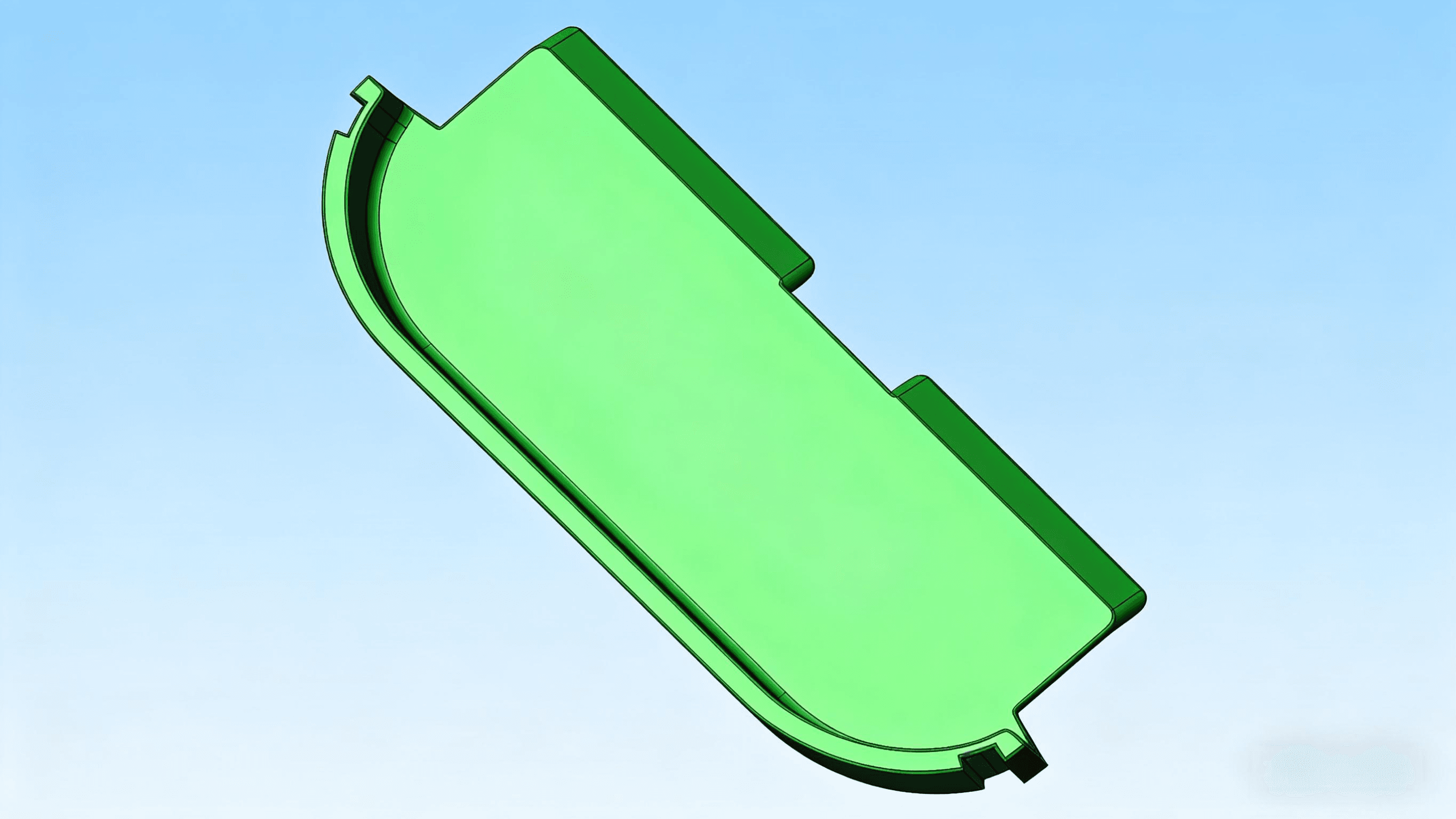
5-axis CNC machined, Class II pulse generator device
Component and project specification summary:
| Parameter | Specification / Requirement |
|---|---|
| Material | PEEK ZA-500 (medical grade, ISO 10993 biocompatible) |
| Device Classification | Class II Medical Device — FDA 21 CFR / MDR applicable |
| Manufacturing Process | 5-Axis CNC Milling + Ultrasonic Cleaning + Laser Marking |
| Geometry | Thin-wall structure with complex curved profiles |
| Surface Requirement | Cosmetic medical-grade — no scratches, burrs, or tool marks |
| Traceability | 100% unit-level — individual laser marking, UDI-ready |
| Batch Size | 500 units — initial production batch |
Manufacturing Challenges: What Makes Medical PEEK CNC Machining Demanding
Medical PEEK CNC machining differs from standard engineering polymer work in three critical ways: the material behaviour during cutting, the surface finish standard required, and the traceability obligation that attaches to every unit. Each of these dimensions presented a specific engineering challenge on this project.
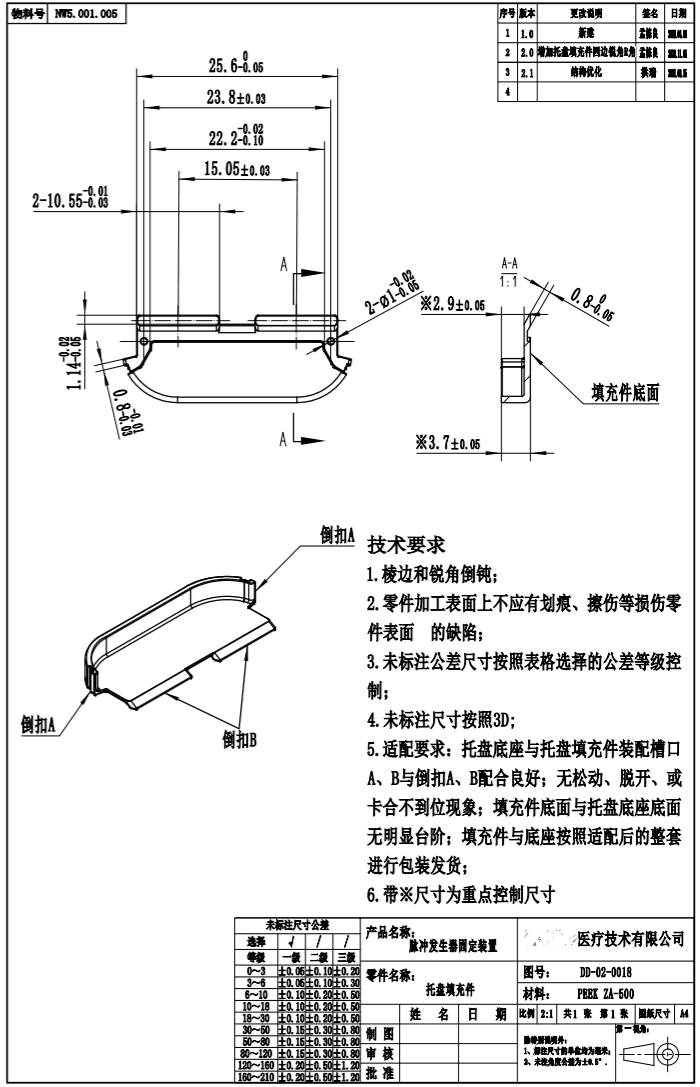
custom anti-deformation fixture, complex curved profile
① Thin-Wall Deformation During Machining
PEEK ZA-500 combines high stiffness with low thermal conductivity. In thin-wall sections, cutting forces and heat accumulation during material removal can cause localised stress that distorts the geometry — particularly on the complex curved profiles of this component. Without deliberate fixturing and cutting parameter management, the finished part dimensions will deviate from the programmed geometry after unclamping.
② Cosmetic Surface Quality — Medical Standard
The component requires a cosmetic medical-grade surface finish — defined not just by roughness parameters but by the complete absence of scratches, burrs, witness marks, and tool path artifacts visible to the naked eye. This standard is significantly stricter than industrial surface finish requirements and cannot be achieved through standard post-machining deburring alone. It requires correct tooling selection, optimised cutting conditions, and a validated post-processing cleaning protocol.
③ 100% Unit-Level Traceability
Class II medical device regulations require that every individual unit can be traced through its complete manufacturing history — material lot, machining parameters, inspection results, operator, and date. This traceability must be encoded on the part itself in a format compatible with UDI (Unique Device Identification) requirements, without compromising the surface or dimensional integrity of the component.
Our Manufacturing Solution: 5-Axis Precision, Custom Fixturing, and Full Traceability
Precimach developed a four-element manufacturing solution addressing each challenge systematically — combining 5-axis machining capability, purpose-engineered fixturing, medical-grade post-processing, and regulatory-compliant traceability into an integrated production workflow.
High-Precision 5-Axis CNC Milling — Single-Setup Accuracy
5-axis simultaneous machining allowed the complex curved profiles of the tray filler to be completed in a single setup — eliminating the re-clamping and datum re-referencing steps that introduce dimensional error in multi-setup approaches. With the workpiece repositioned continuously by the rotary and tilt axes rather than manually re-fixtured, all critical surfaces were machined in a single coordinated sequence with consistent datum reference throughout. This is the primary reason 5-axis machining is specified for complex medical device components: not simply because it can reach difficult angles, but because it achieves better dimensional consistency by minimising the number of times the part changes reference.
Custom Anti-Deformation Fixtures
Custom fixtures were designed to fully support the thin-wall PEEK structure during material removal, distributing clamping force across the part geometry rather than concentrating it at a small number of contact points. The fixture geometry was engineered to match the curved back face of the component — ensuring that cutting forces during profiling and contouring passes are transferred into the fixture rather than deflecting the workpiece. This approach directly prevents the stress-induced dimensional deviation that standard vise or step clamping produces on thin-wall PEEK components.
Ultrasonic Cleaning — Medical-Grade Cleanliness
After machining, all components underwent ultrasonic cleaning using a validated medical-grade cleaning protocol. Ultrasonic cleaning removes machining residues, cutting fluid traces, and micro-particles from complex curved surfaces and internal features that manual cleaning cannot reliably reach. The cleaning process was validated to ensure no chemical residue or particulate contamination that could affect biocompatibility or device function remained on any part surface. Cleanliness validation records were maintained as part of the batch documentation package.
Individual Laser Marking — UDI-Ready Unit Traceability
Each unit received an individual laser-marked identifier linking it to its complete manufacturing record — material lot certificate, machining program version, CMM inspection data, operator ID, and production date. The marking format was designed to be UDI-compatible, enabling the client to integrate the Precimach-generated serial data directly into their UDI database without additional re-marking at their facility. Laser marking on PEEK produces a high-contrast, permanent mark with no material removal that would affect dimensional accuracy or surface integrity — making it the correct method for traceability marking on precision polymer medical components.
Manufacturing note: The combination of 5-axis single-setup machining, custom anti-deformation fixturing, and validated ultrasonic cleaning in medical PEEK CNC machining is not incidental — each element addresses a specific failure mode that would otherwise appear in the inspection or traceability record. The 100% first-pass yield on this batch was a direct consequence of this integrated approach.
Quality Inspection, Results, and Delivery
CMM Inspection Protocol
All 500 components were subject to 100% dimensional inspection using CMM (Coordinate Measuring Machine) measurement systems. CMM inspection was conducted on all critical dimensional features specified on the drawing — including profile dimensions on the curved surfaces, wall thickness at specified measurement points, and positional tolerances of functional features. Visual inspection for surface cosmetics (scratches, burrs, tool marks) was conducted under controlled lighting conditions per the cosmetic acceptance criteria defined in the inspection plan.
Inspection data for each unit was recorded against the individual laser-marked serial number, creating a complete unit-level traceability chain from raw material to finished, inspected component.
100%
first-pass yield — 500 units, zero rework
100%
unit-level traceability — every part linked to full inspection record
Early
delivery — completed and shipped ahead of client’s assembly schedule
Zero
dimensional failures — all critical dimensions within drawing tolerance
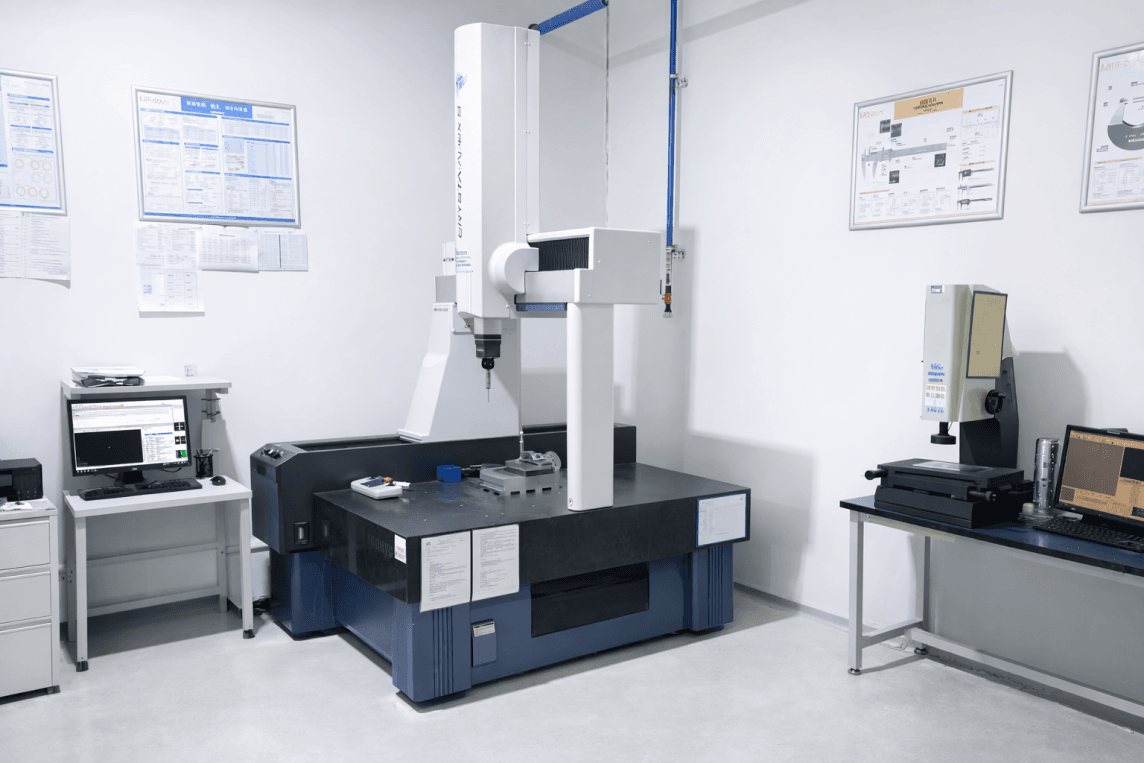
CMM inspected, laser marked, UDI-ready
✓
All critical dimensions within drawing tolerance
100% of CMM inspection points on all 500 units conformed to drawing specifications — no dimensional failures recorded in the batch
✓
Cosmetic surface quality — medical grade confirmed
All 500 units passed visual cosmetic inspection — no scratches, burrs, tool marks, or witness lines identified on any part surface
✓
100% unit-level traceability complete
Every unit laser-marked with individual serial number linked to material lot certificate, machining record, CMM data, and inspection sign-off
✓
Immediately approved for assembly
Parts were received, verified against the documentation package, and approved for assembly without additional incoming inspection steps at the client’s facility
Technical Note: Qualifying a CNC Machining Supplier for Medical PEEK Components
For medical device engineers and procurement professionals qualifying CNC machining suppliers for medical PEEK CNC machining, the key differentiators between capable and inadequate suppliers are not found in machine specifications alone. The questions that most reliably predict successful outcomes for Class II and Class III device components are:
- How do you control thin-wall deformation in PEEK? The answer should reference specific fixture design — not just machine rigidity or cutting parameters.
- What is your post-machining cleaning protocol? A validated ultrasonic cleaning process with documented cleanliness acceptance criteria is the correct answer for medical-grade surface requirements.
- How do you implement unit-level traceability? The supplier should describe their laser marking system, the data fields encoded per unit, and how the marked data links to their batch manufacturing records.
- What is your first-pass yield on PEEK medical components? A supplier with genuine PEEK medical device experience will have documented yield data from previous batches.
- Are your processes documented and auditable? Medical device suppliers should operate under a documented quality management system — for Class II and above, ISO 13485 certification is the relevant benchmark.
For further technical reference on biocompatibility evaluation requirements for medical-grade materials including PEEK used in patient-contact and implantable device components, the ISO 10993-1 standard (Biological evaluation of medical devices — Part 1: Evaluation and testing within a risk management process) provides the internationally recognised framework used by medical device manufacturers and their machining suppliers to define, evaluate, and document material biocompatibility for regulatory submissions globally.
Industry reference: ISO 10993-1 — Biological evaluation of medical devices: Evaluation and testing within a risk management process is the international standard governing biocompatibility assessment for materials used in medical devices — including PEEK ZA-500 and other polymers used in Class II and Class III implantable and patient-contact applications. Compliance with ISO 10993 is required for FDA 510(k) submissions and CE marking under EU MDR.
Sourcing Precision CNC Machined Medical Device Components?
If you are sourcing precision CNC machined components for Class I, II, or III medical devices — including PEEK, titanium, stainless steel, or other medical-grade materials — and require a supplier who combines dimensional precision with medical-grade surface quality and full regulatory traceability, Precimach has the capability and the documented process history to support your project.
Ready to discuss your medical device machining project?
Precimach is an ISO 9001 certified CNC machining factory in Suzhou, China — specialising in 5-axis CNC machining for medical device components, aerospace, and high-precision industrial applications. We support Class II and Class III medical device component production with full unit-level traceability, validated cleaning processes, and CMM inspection documentation.
- 5-axis CNC machining — single-setup accuracy for complex geometries
- Medical-grade PEEK, titanium, stainless steel, and engineering polymers
- Custom anti-deformation fixturing for thin-wall medical components
- Ultrasonic cleaning — validated medical-grade cleanliness protocol
- Individual laser marking — UDI-ready unit-level traceability
- 100% CMM inspection with full dimensional reports per batch
- ISO 9001 certified — audit-ready documentation package